

The Power of Foreground Elements in Landscape Photography

When we arrive at a location, nature photographers often spend far more time searching for foreground elements than anything else. The light may be beautiful and the distant landscape breathtaking — but without something meaningful in the foreground, the image can feel distant and detached.
We aren’t just trying to photograph scenery. We want to convey a sense of being there.
A successful nature photography composition allows viewers to experience a place rather than simply observe it. They should feel as though they can step into the frame, touch the rocks, feel the water moving past their feet, or walk into the landscape itself.
Foreground elements help transform a photograph from a visual record into an immersive experience.
Why Foreground Elements Matter in Landscape Photography Composition
A strong foreground element can completely change how a viewer experiences an image.
Without foreground interest, landscapes often appear flat or unreachable. The viewer stands outside the photograph instead of inside it.
What a Strong Foreground Element Can Do
A well-chosen foreground element can:
- Create depth and dimensionality
- Establish scale and perspective
- Provide context and sense of location
- Lead the viewer’s eye into the frame
- Add texture and tactile realism
- Create emotional engagement
- Differentiate similar landscapes
- Strengthen storytelling in nature photography
In essence, foreground elements bridge the gap between viewer and landscape.
They invite participation.
Creating More Personal Landscape Photography Compositions
When you move closer to foreground subjects, your photography becomes more intimate and experiential.
During a visit to Snowmass Wilderness in Colorado, the landscape offered expansive beauty but very few obvious foreground subjects. Instead of relying solely on distant scenery, the textured bark of nearby trees became the compositional anchor.

Nature photography composition with foreground trees, Snowmass Wilderness, Colorado by Varina Patel
The peeling white bark introduced something viewers instinctively recognize. Even without touching it, they understand its texture and form. Memory fills in sensory details — warmth of sunlight, scent of forest air, roughness beneath fingertips.
This psychological connection is powerful.
When viewers recognize textures, their brains engage more deeply with the image. Familiar sensations merge with visual perception, creating emotional resonance.
Foreground elements make landscapes personal.
Using Foregrounds to Create a Sense of Presence
Consider a photograph captured in Everglades National Park. The environment feels entirely different from alpine wilderness — humid air, distant thunderheads, grasses moving in the wind.
Foreground elements help communicate these sensations.
-

Creating a sense of depth with foreground elements, Everglades National Park, Florida
-

Strong foreground element in Pineglades Lake, Everglades National Park, Florida by Jay Patel
Dry grass in the foreground crackles under imagined footsteps. Light filtering through storm clouds adds tension. A small alligator appearing near the front of the frame instantly establishes place and mood.
Suddenly the viewer is not just observing nature — they are participating in it.
Foreground subjects can even introduce emotional layers such as curiosity, calmness, or danger.
Try this simple exercise: Cover the foreground portion of a strong landscape photo with your hand or a sheet of paper.
Ask yourself:
- Does the image feel flatter?
- Does it lose emotional impact?
- Is the sense of place reduced?
In many cases, removing the foreground removes the experience.
Differentiating Familiar Terrain with Foreground Elements
One challenge in nature photography is photographing locations that appear visually similar.
Deserts are a perfect example.
Sand dunes, distant mountains, and open skies often look alike across regions. Without foreground detail, viewers may struggle to distinguish one location from another.
Foreground elements solve this problem.
Textures, colors, and patterns near the camera provide geographic clues:
- Unique rock formations
- Meandering erosion lines
- Desert vegetation
- Cracked earth patterns
- Backlit textures at sunrise or sunset
-
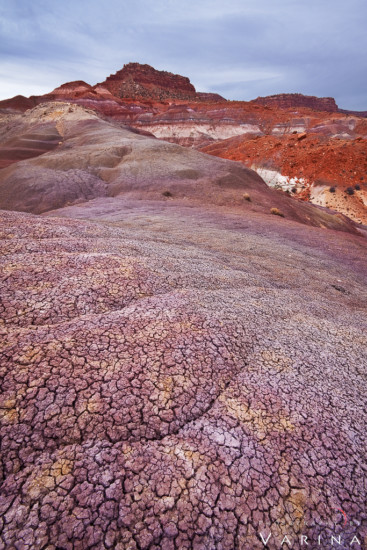
Nature photography composition with meandering foreground element full of colors and textures at Grand Staircase-Escalante National Monument, Utah
-

Leading lines in photography composition, Toad Stool, Utah
-
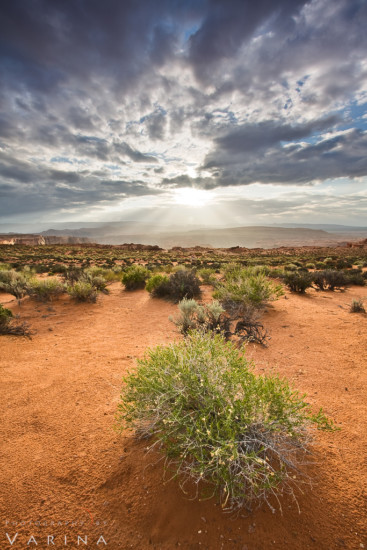
Backlit foreground element at Horseshoe Bend, Arizona
Images captured near Page, Arizona demonstrate how varied foregrounds transform similar desert environments into distinct visual experiences.
A wide-angle lens allows photographers to move physically closer to foreground textures, exaggerating perspective and creating dramatic depth.
This approach is a foundational technique in wide-angle landscape photography composition.
Creating Depth with Leading Foreground Elements
Foregrounds don’t always need to be static objects.
They can also function as visual pathways.

Creating depth with flowing water at Douglas Falls, Blackwater Falls, West Virginia by Jay Patel
Examples include:
- Flowing water
- Curving trails
- Rock formations
- Fallen logs
- Patterns in sand or snow
These elements act as leading lines in landscape photography, guiding the viewer’s eye naturally toward the subject or horizon.
A strong foreground line transforms composition into a visual journey rather than a static scene.
Using Shallow Depth of Field for Creative Foreground Compositions
Foreground elements aren’t only used for maximum sharpness. Sometimes selective focus creates stronger storytelling.
A creative approach involves keeping the foreground sharply focused while allowing the background to soften.
This technique produces a dreamy atmosphere while still maintaining enough environmental detail to establish place.
Examples include:
- Flowers sharply focused with waterfalls softly blurred behind
- Beach textures in focus with distant sunset fading gently
- Natural textures emphasized over grand scenery
-

Nature photography composition with sharp lupine flower in foreground and soft Skogafoss in background, Skogafoss, Iceland
-

Photography composition with sharp foreground element with soft background from Sunset Beach, Mana Island, Fiji
Key Factors for Success
Achieving this effect depends on:
- Aperture selection
- Distance between camera and foreground
- Distance between foreground and background
- Lens focal length
Experimentation in the field is essential.
Small adjustments dramatically change the visual balance.
Using Soft Foreground Elements to Simplify Composition
Foreground elements can also simplify an image rather than add complexity.
By intentionally blurring foreground objects, photographers can:
- Frame the subject naturally
- Hide distracting elements
- Add depth without clutter
- Direct viewer attention

Blurred foreground elements used in wildlife photography composition to simplify the photo and hide unappealing mid-ground.
In wildlife photography, this approach is especially powerful. Soft foreground blur can obscure distracting surroundings while maintaining environmental context.
The result feels immersive and natural — as though the viewer is observing from within the habitat.
Technical Challenges When Using Foreground Elements
Including strong foreground subjects introduces technical complexity.
Achieving Sharp Focus Throughout the Frame
When foreground elements are very close to the camera, depth of field becomes challenging.
Two effective solutions include:
1. Hyperfocal Distance Technique
Using hyperfocal focusing ensures acceptable sharpness from foreground to background. This is especially useful in grand landscape scenes where detail matters throughout the frame.
2. Focus Stacking
Focus stacking combines multiple exposures focused at different distances. This technique is ideal when foreground subjects are extremely close or when maximum sharpness is required for large prints.
Both workflows are commonly used in professional nature photography composition.
Managing Exposure Across Wide Dynamic Range
Foreground-heavy compositions often include bright skies and darker foreground details.
To preserve detail:
- Use exposure bracketing
- Capture multiple exposures
- Blend manually during post-processing
This allows detail retention in both shadows and highlights while maintaining natural contrast.
Large prints especially benefit from this workflow, revealing intricate foreground textures viewers might otherwise miss.
How to Find Strong Foreground Elements in the Field
Developing awareness is key.
Instead of immediately pointing your camera toward distant scenery, slow down and observe what exists at your feet.
Look for:
- Interesting textures
- Patterns and repetition
- Light interacting with surfaces
- Objects that reveal scale
- Elements that tell a story about location
A useful habit is to walk the scene without your camera first. Notice details you might otherwise overlook.
Often the best foreground elements are subtle rather than obvious.
Practical Tips for Using Foreground Elements in Nature Photography
-
Move Your Camera Lower
Lower camera positions exaggerate foreground size and increase depth.
-
Use Wide-Angle Lenses Thoughtfully
Wide lenses emphasize spatial relationships and create immersive perspective.
-
Balance the Composition
Foregrounds should support the image — not dominate unnecessarily.
-
Watch Edge Distractions
Foreground clutter near frame edges can weaken composition.
-
Pay Attention to Light
Side light and backlight reveal texture and enhance foreground impact.
When NOT to Use Foreground Elements
Foreground elements are powerful but not mandatory.
Avoid forcing them when:
- The scene relies on minimalism
- Strong graphic patterns dominate
- Atmospheric conditions are the primary subject
- Simplicity strengthens storytelling
Composition is always about intention, not rules.
Strong nature photography composition comes from learning how to see more clearly and simplify complex scenes. If you want step-by-step guidance, check out our in-depth nature photography composition Tutorials that break down composition techniques, visual flow, and simplification strategies you can apply immediately in the field.
Bringing Viewers Into Your World
Nature photography is not only about grand vistas or dramatic light. It is about connection — the quiet moment when a place begins to feel familiar and alive.
Foreground elements allow us to share that connection. They bring viewers closer to the textures, sensations, and emotions we experienced when standing in the landscape. A rock, a flower, a winding line in the sand — these small details become the doorway into a much larger story.
So slow down when you arrive at your next location. Look closely before looking far. The foreground may hold the key to transforming a beautiful scene into a photograph that feels real, immersive, and deeply personal.
Because the most powerful images don’t simply capture nature — they invite us to belong within it.
 Like
0
Like
0
 Dislike
0
Dislike
0
 Love
0
Love
0
 Funny
0
Funny
0
 Wow
0
Wow
0
 Sad
0
Sad
0
 Angry
0
Angry
0









Comments (0)